Rafael Vilela – I believe my images reflect the shared process of Indigenous movements
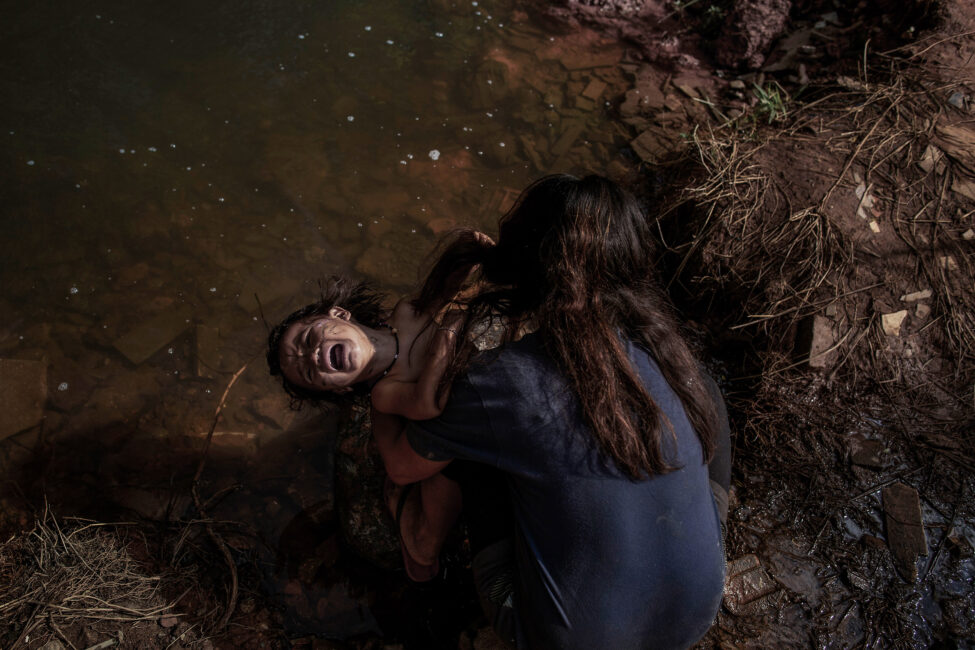
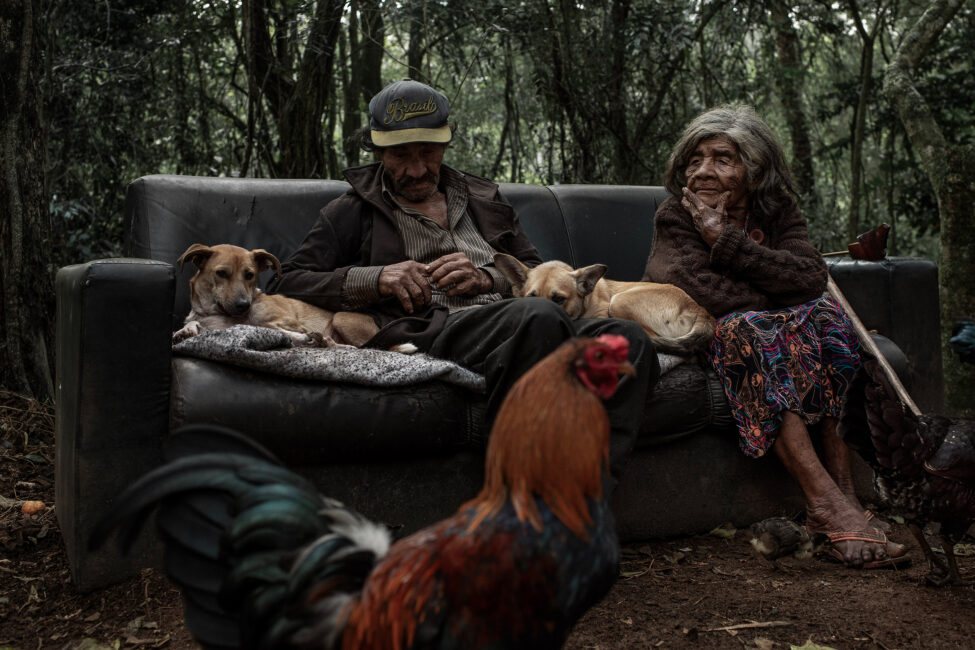
The Guarani Mbyá Indigenous community preserves its spirituality on the smallest Indigenous land in Brazil, nestled in the heart of the largest metropolis in the Americas. In 1500, during the Portuguese invasion, the Guarani inhabited a vast territory stretching from Brazil’s coastline to the Río de la Plata in Argentina and Uruguay. Their land consisted of hundreds of prosperous villages, with complex systems of agriculture and food production. Uprooted, enslaved, and catechized, thousands were forced to work on São Paulo’s plantations and other colonial enterprises until the mid-1800s, contributing to the city’s rise as a global hub.
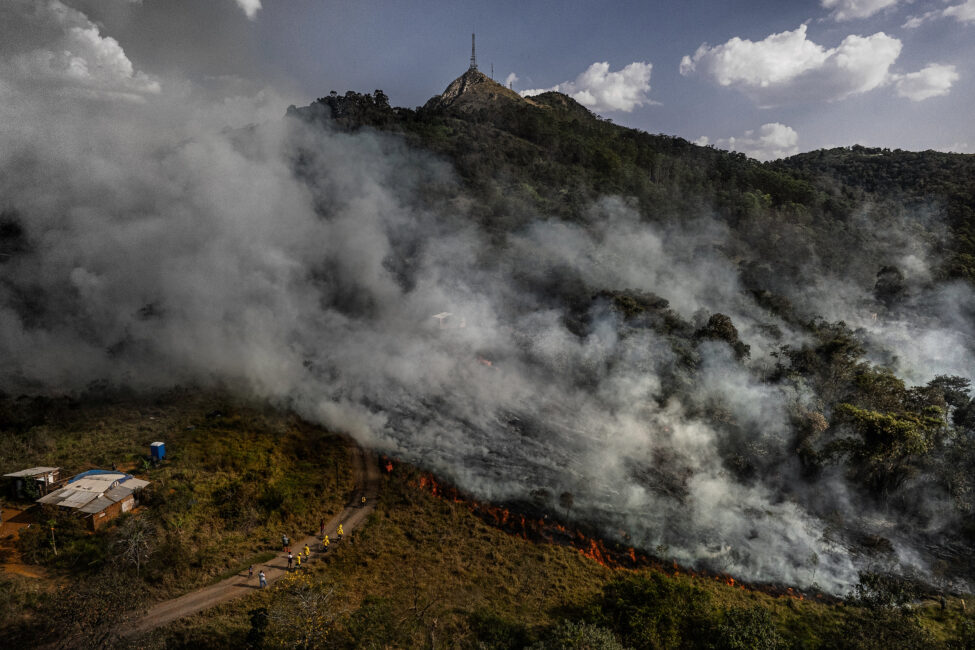
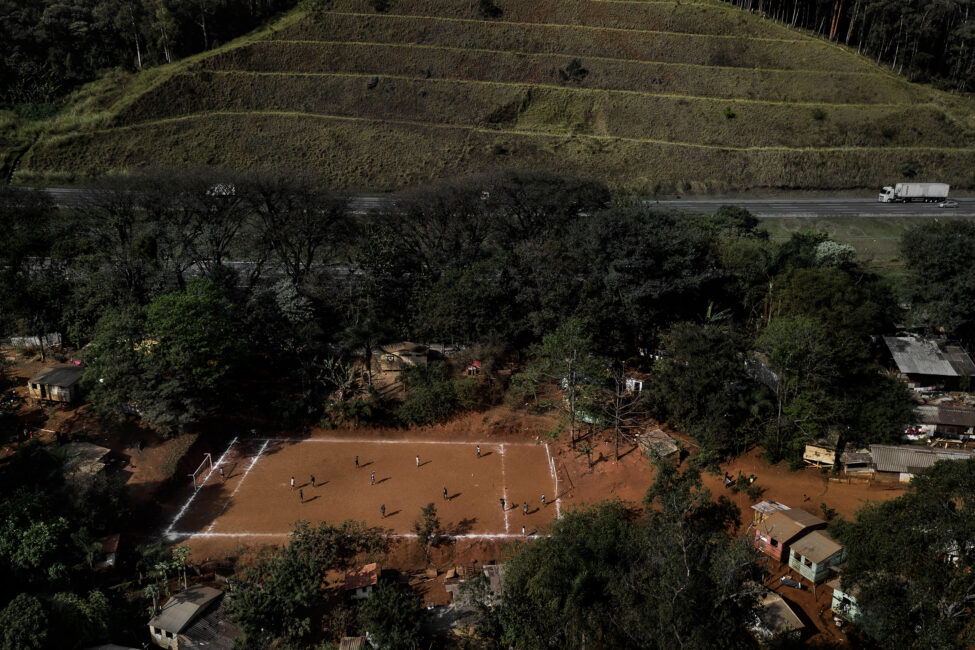
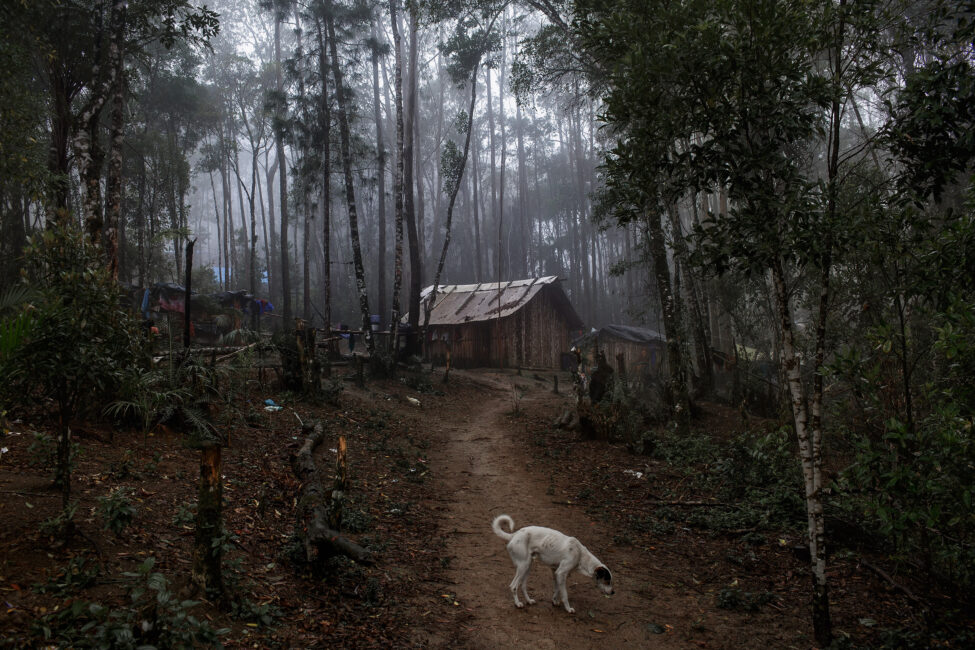
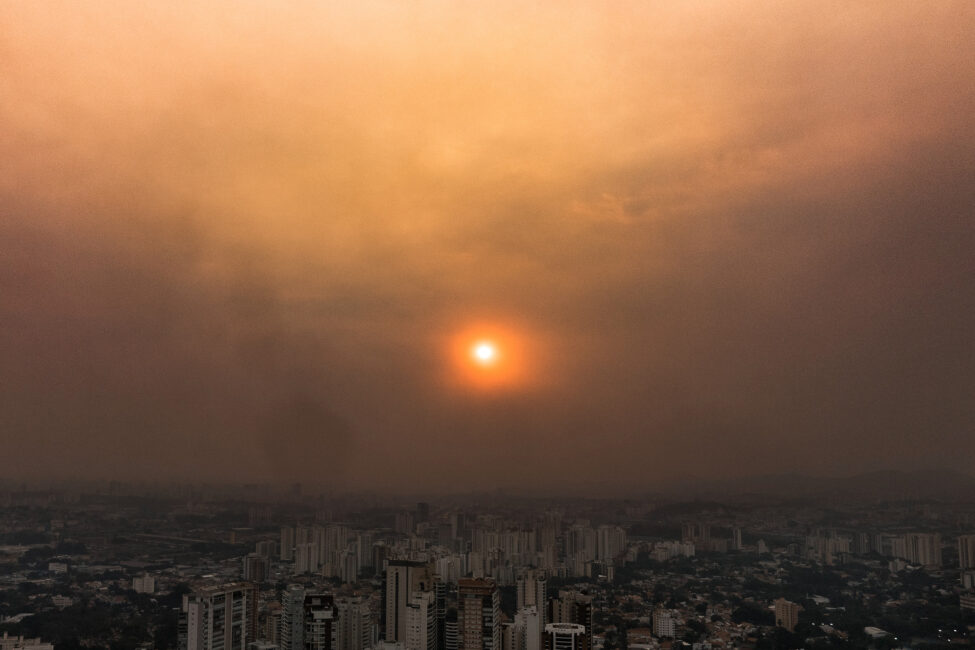
Today, under the pressure of urban sprawl, this community embodies a microcosm of the global climate crisis. Surrounded by more than 21 million people, they are the guardians of one of the last remnants of the rainforest on the plateau that gave rise to the modern metropolis. At the center of this territory stands the Jaraguá Peak, the highest point in the city, a place of ecological and spiritual significance that the Guarani continue to inhabit and defend amid the ongoing expansion of the city.
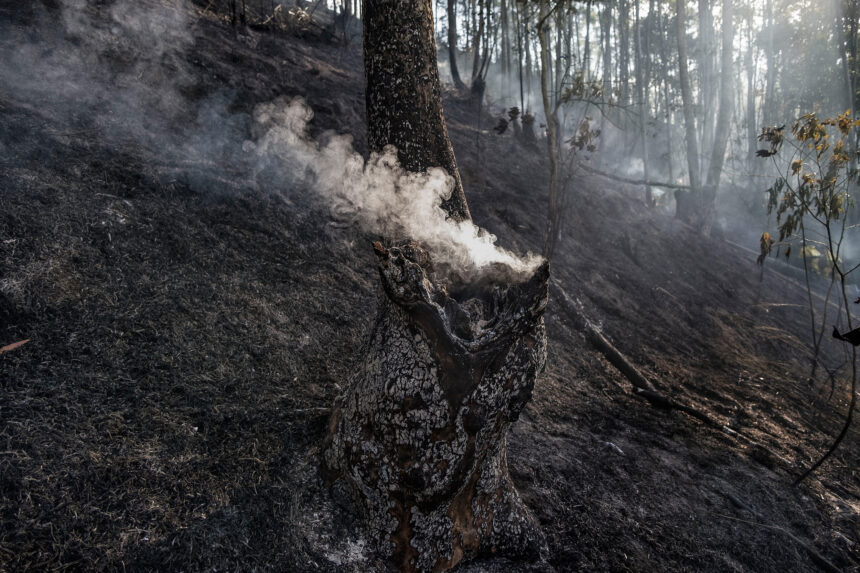
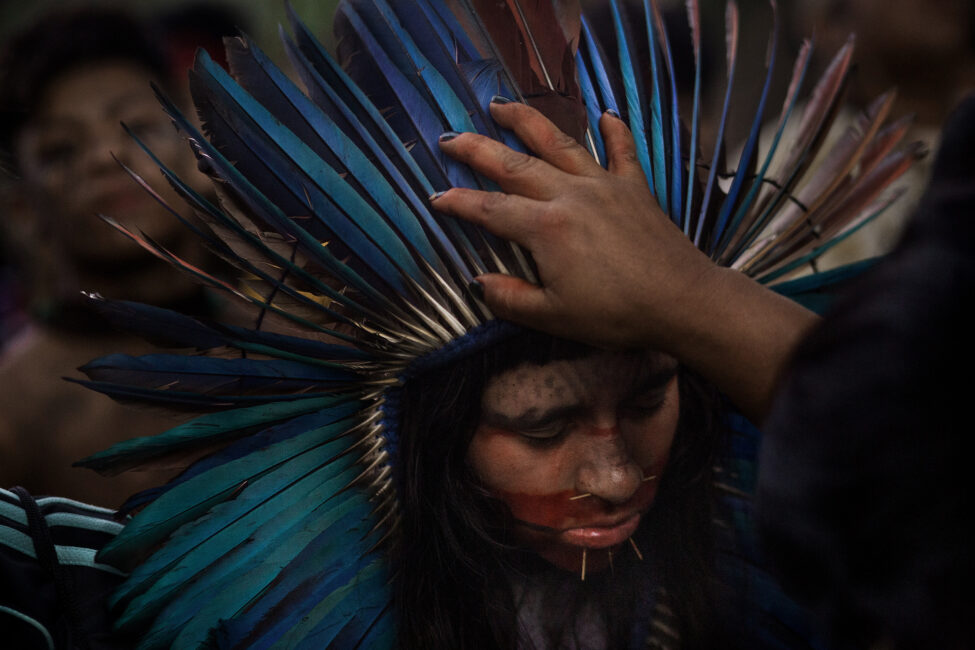
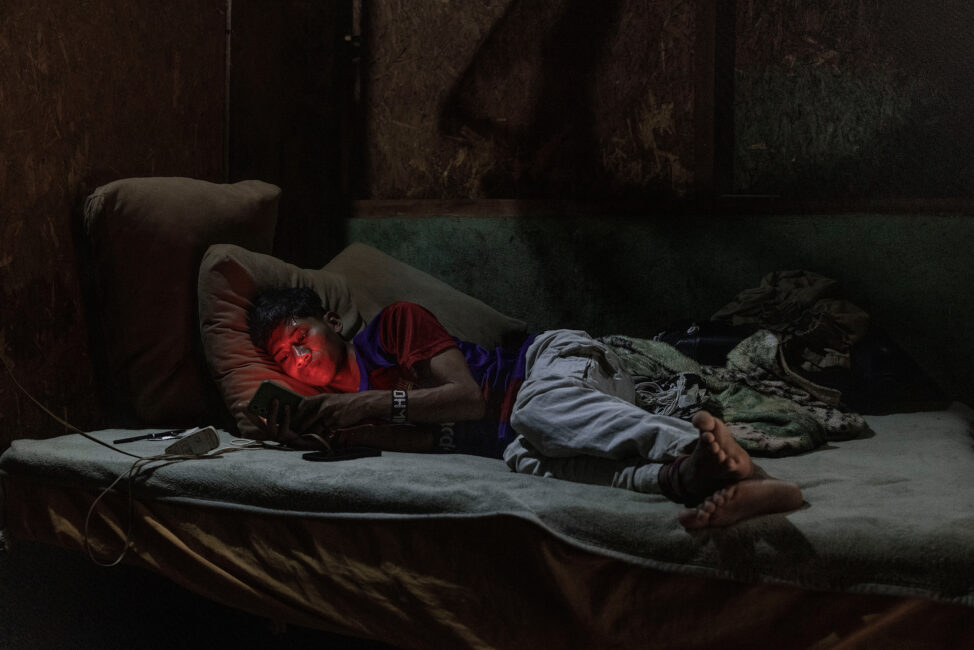
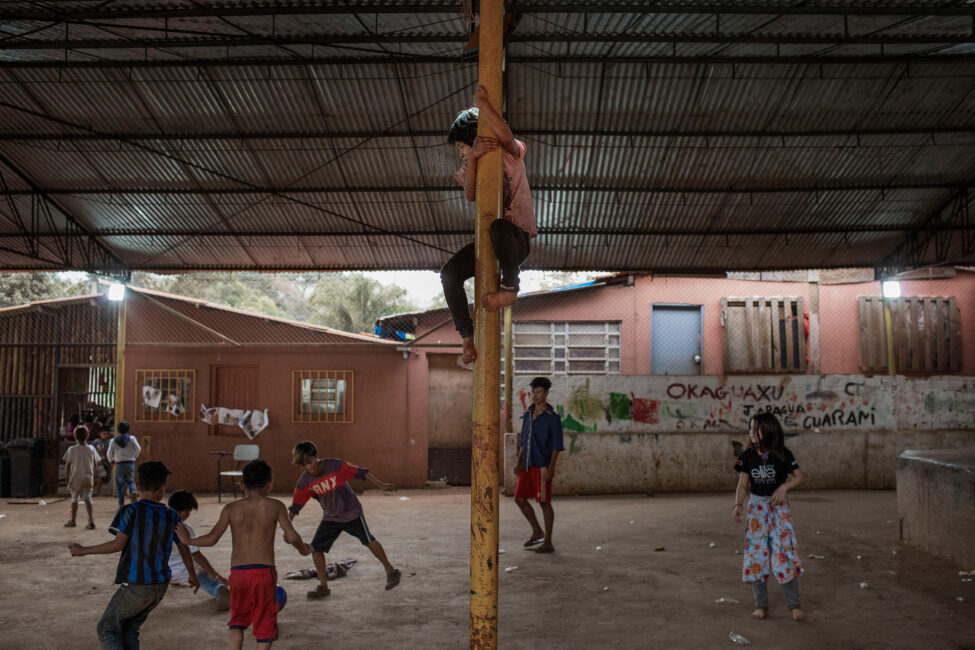
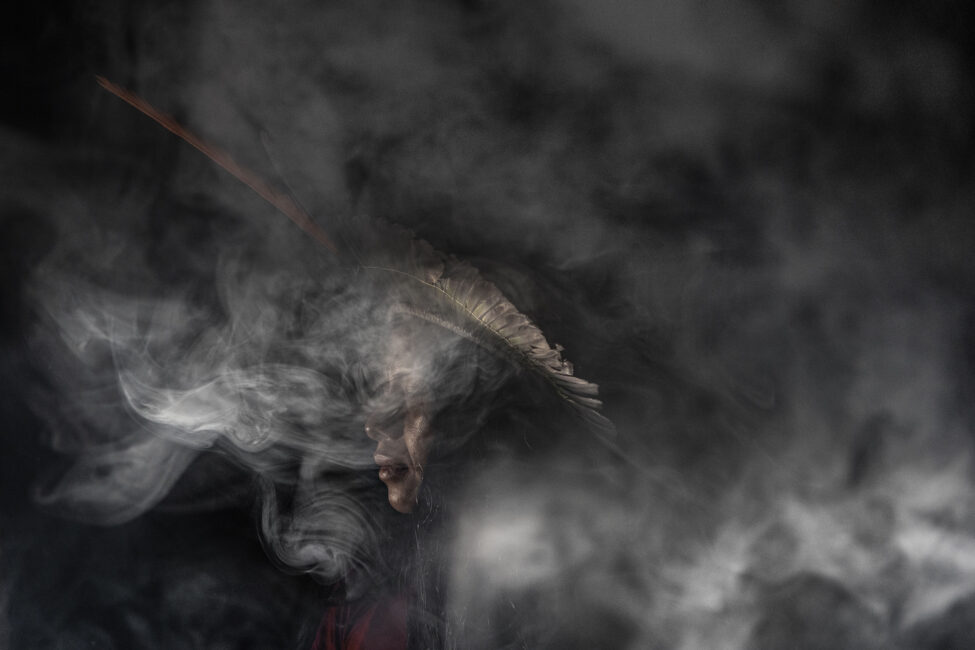
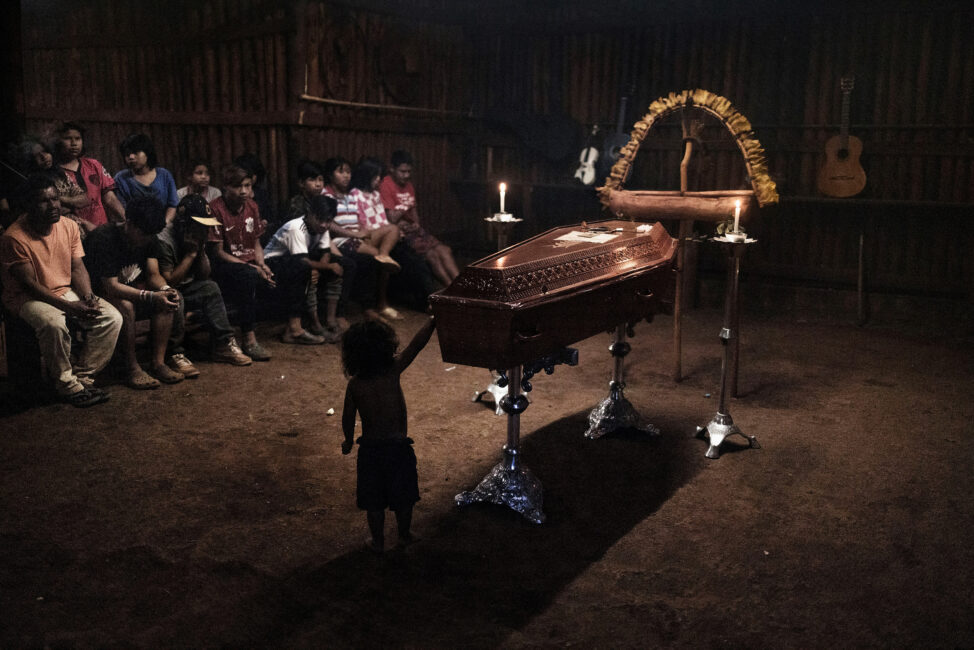
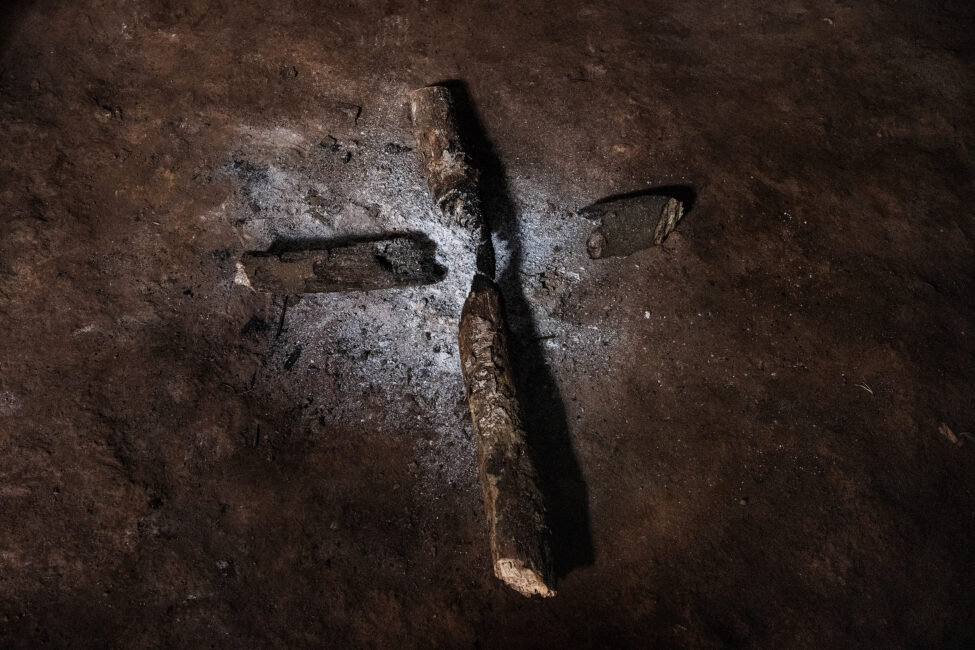
Despite the pressures of city life, their sacred and daily practice remains the smoking of the Petynguá pipe, made from the araucaria tree, once abundant in the region and now endangered. For the Guarani, smoke is a sacred language, connecting past, present, and future, and offering a channel through which they commune with their deities. This continuity also takes shape through a young and growing community that uses digital technologies to protect their language, share ancestral knowledge, and assert their presence across new political and cultural spaces.
In 2025, the Guarani celebrated a historic milestone with the official announcement and the beginning of the physical delimitation of the Jaraguá Indigenous Territory, expanding it from just 1.7 hectares to 532 hectares after decades of confinement. The marking of the land represents a turning point in an ongoing process to transform what is now the smallest Indigenous land in Brazil into one of the largest Indigenous territories located within a megalopolis.
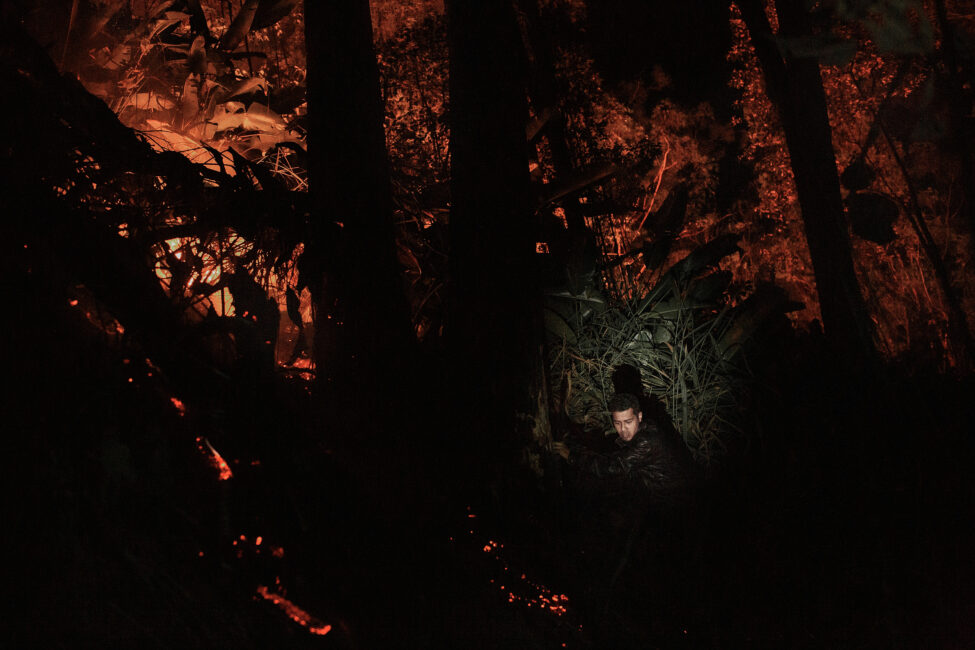
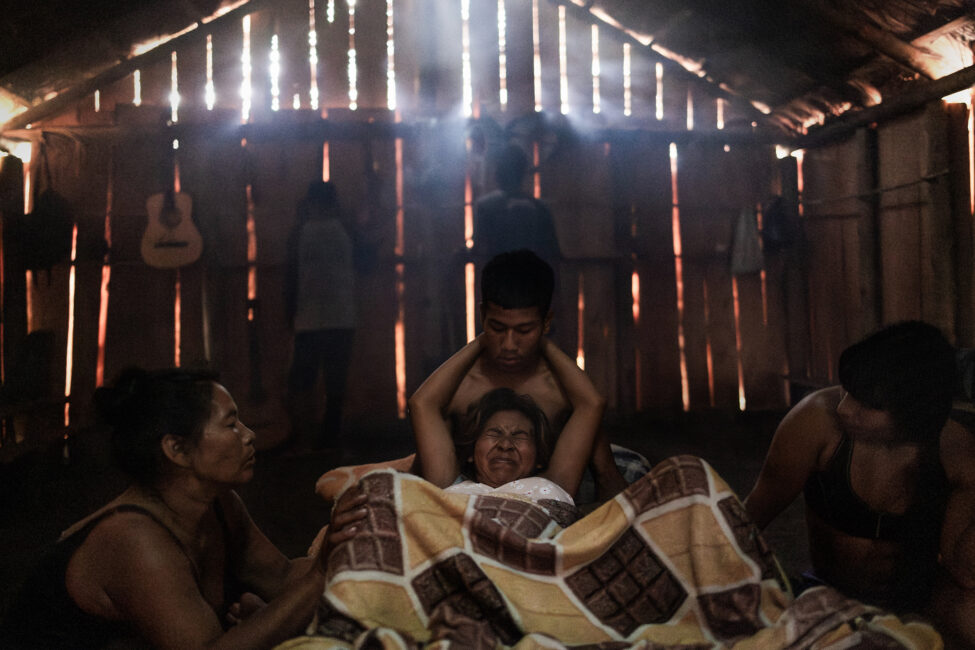
At the crossroads of jungle and asphalt, where clean air collides with urban pollution, life and death intertwine within Guarani existence, both as a spiritual journey and a confrontation with an urban model that fractures collective life and separates humanity from nature.
On the occasion of the “Forest Ruins” that is a personal ongoing Rafael’s Vilela project that addresses the role of cities in the climate crisis from the perspective of the Guarani Mbyá Indigenous people in the city of São Paulo, Brazil, and how their philosophy, culture and traditions offer alternative paths of existence and resistance to a colonial development model, photologio with Athina Aliki interviewed Rafael Vilala.
Rafael Vilela
When a forest is pressed by urban expansion, what exactly becomes a “ruin”?
The term Forest Ruins was coined by the Indigenous philosopher and thinker Ailton Krenak to describe the destruction of a way of life developed over millennia by the Indigenous peoples who inhabited this territory at the time of European invasion. The Portuguese and Spanish, who first made contact with the Guarani, attempted to eradicate something without even grasping its value and magnitude: a culture in equilibrium with the forest, one that understood itself as part of nature, not separate from it. Despite five centuries of attempts to completely extinguish that possibility, it survives. The Guarani continue to speak their original language, pray to Nhanderu, cultivate food, and practice Nhanderekó, their traditional way of life. Although they endured profound losses through catechization, enslavement, and subjugation, just as hundreds or thousands of entire Indigenous cultures were wiped out, their presence today amid urban expansion stands as proof of their strength and vitality.
In a way, to respond to your question, this is the story of European urban expansion pressing against a forest- and against savannas, wetlands, natural grasslands, and many other biomes beyond the forest that are equally vital to our planet- overseas. That history continues. Pico do Jaraguá is a microcosm of this larger narrative. It is the city of São Paulo pressing against the last remaining fragment of tropical forest within the megacity. There are more than a thousand Guarani resisting in their nine villages. It is the ruin of a culture and a way of living that offers important answers for our future in times of crisis.
Rafael Vilela
Your pictures move between daily life, ritual, and political pressure. How do you resist the spectacle of conflict while still showing the systemic forces that make conflict inevitable?
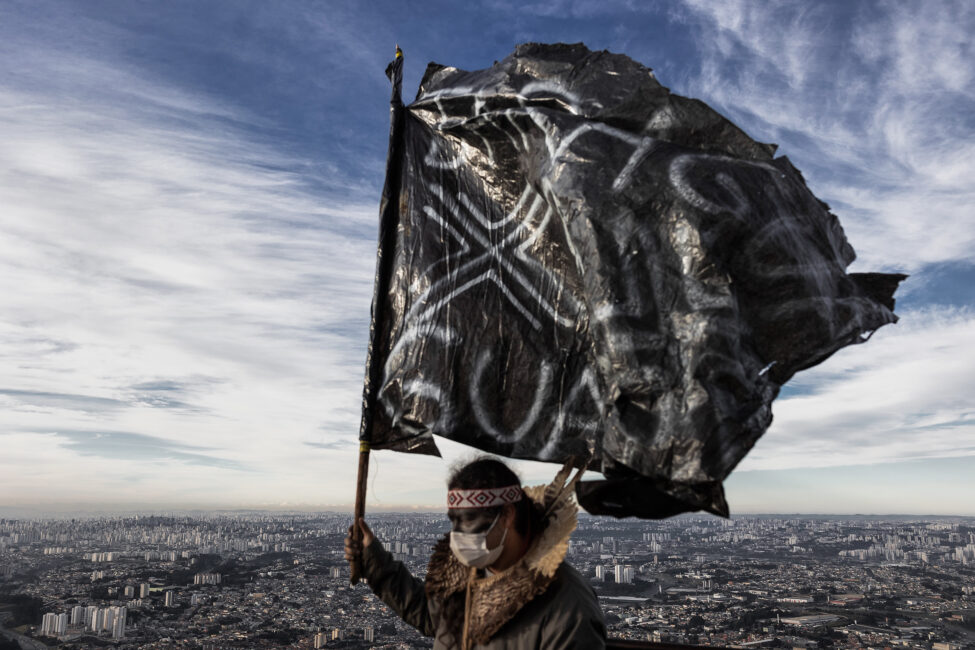
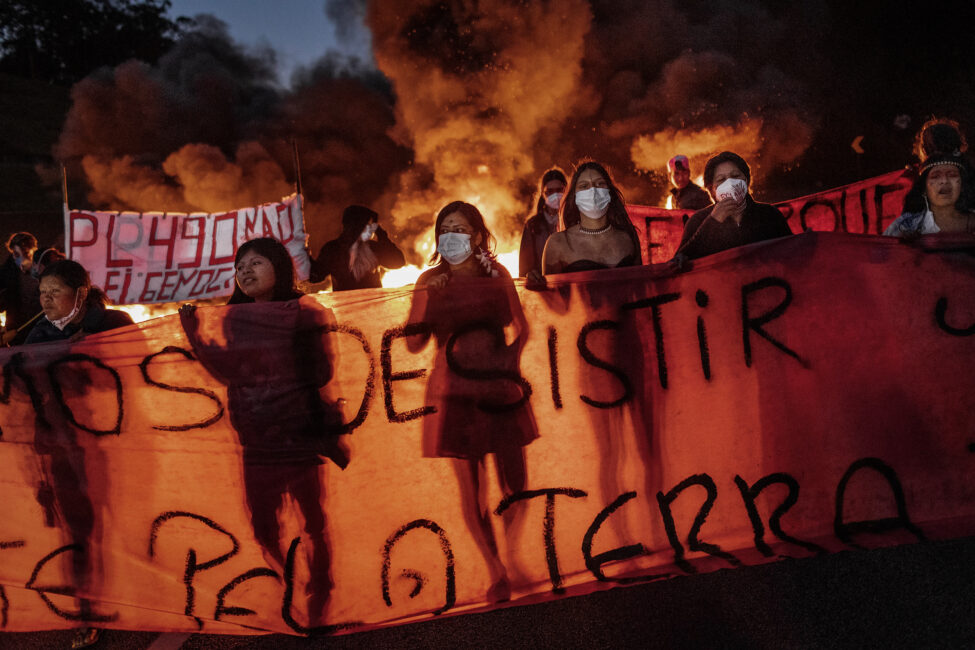
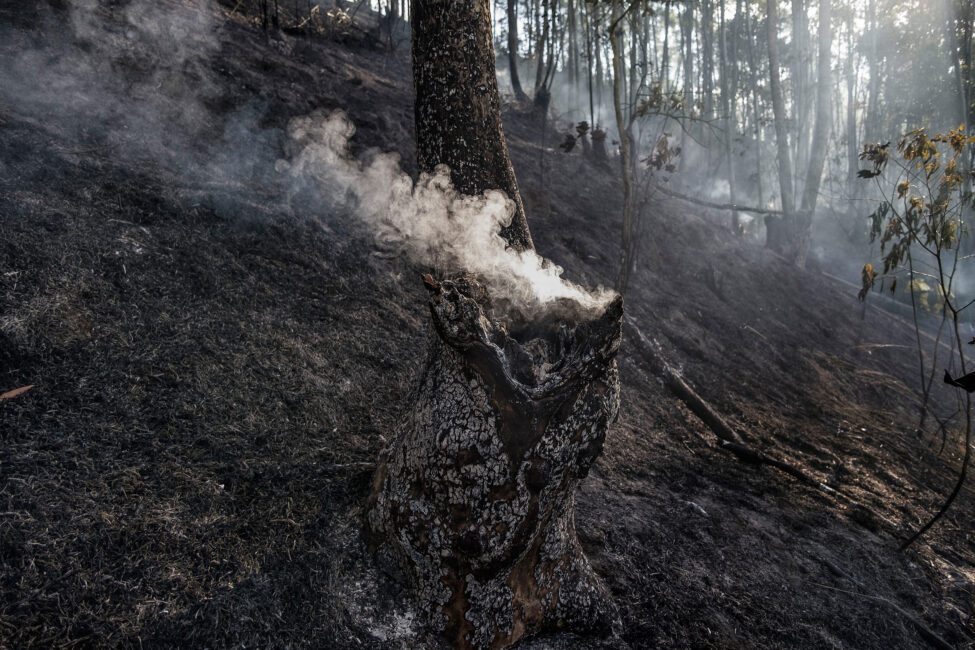
I believe conflict is implicit in my images. Colonization is a war that never ended, as Krenak defines it. What changes is its form: it becomes more subtle, more invisible, yet it remains alive, attempting to exterminate and standardize ways of life across the planet according to a Western model. Of course there are images of explicit conflict – protests, occupations, fire on the highway – but honestly, I do not believe that is the most intelligent way to tell this story. If, as they say, God lives in the details, then the devil does too. This is the case with the highway that cuts through Guarani territory, the Anhanguera Road. This road, inscribed on every map from colonial archives to Google Maps, means “path of the Devil” in Guarani, the critical name given by the Guarani, because it was the primary route used by colonizers in their search for Indigenous enslavement, gold, and other mineral wealth to feed the Crown’s insatiable appetite.
Rafael Vilela
Your vantage point comes through Guarani Mbyá presence and knowledge. What forms of time, belonging, or care did you learn that modern urban planning consistently overlooks?
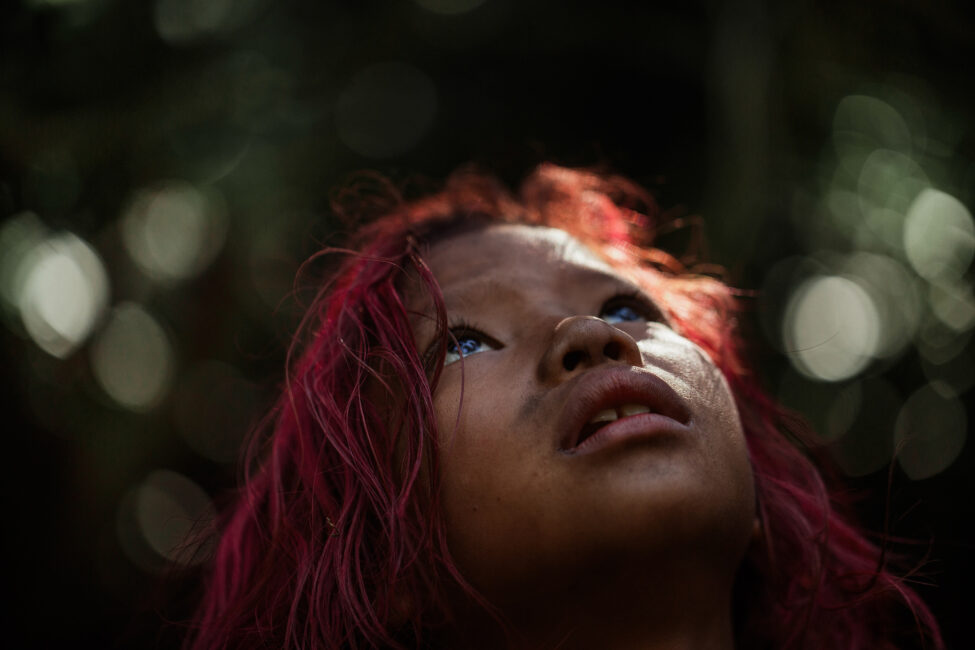
There have been many lessons. I believe time, and the different ways of perceiving and inhabiting temporalities, lies at the center of the entire experience with them. I use an analogy that may sound simple, but I think it works for those distant from this reality: spending extended time in an Indigenous village is somewhat like watching a cult film for the first time after a lifetime of Hollywood. There is an initial sensation of emptiness, as if nothing is happening; it can feel uncomfortable. But it is our own body and mind that are not adapted to this other realm. Much is happening; we are simply not able to see it. Indigenous time is different; their world did not begin to end yesterday. They have lived with this awareness for at least five hundred years.
In terms of care, I was deeply marked by the Guarani relationship to the land in the most literal sense. They spend their days with their feet on the ground; their skin and clothes stained with clay. It is an intimate bond. Those of us who live and grow up in cities have so many layers separating us from the soil, from our planet and from our ground, that we end up forgetting it is even there, and that we are part of it.
Rafael Vilela
How do you structure collaboration so that images are not just “about” the community but also for and by the community?
I see it as an organic process of involvement, as the Brazilian thinker Nego Bispo proposes, in deliberate contrast to what is commonly framed as development. In Portuguese, the two words, envolvimento (involvement) and desenvolvimento (development), share the same root, envolver, which means “to be wrapped into,” “to be engaged with”, and “to be intertwined.” The prefix des- signals undoing or separation. Linguistically, desenvolver suggests an “un-wrapping,” a process of detachment from what one is embedded in. For Nego Bispo, this is not accidental: what is called development often implies distancing from land, community, and relational life, whereas involvement implies remaining entangled, accountable, and present within those relationships.
Six years of relationships have been built. The closer I become, the greater the care and the stronger the desire that my presence there be useful in some way. In recent years, being a photographer in the field may be the least important part of my role in relation to the community. Many times, I am there to give someone a ride, deliver supplies and donations, help raise funds, write projects together. I am an active collaborator in the demands of Indigenous movements, in their social media and actions. I believe the images reflect this shared process.
Rafael Vilela
The project sits within the severely reduced Atlantic Forest biome. How do you photograph ecological loss without making it aestheticized loss, without numbing the viewer?
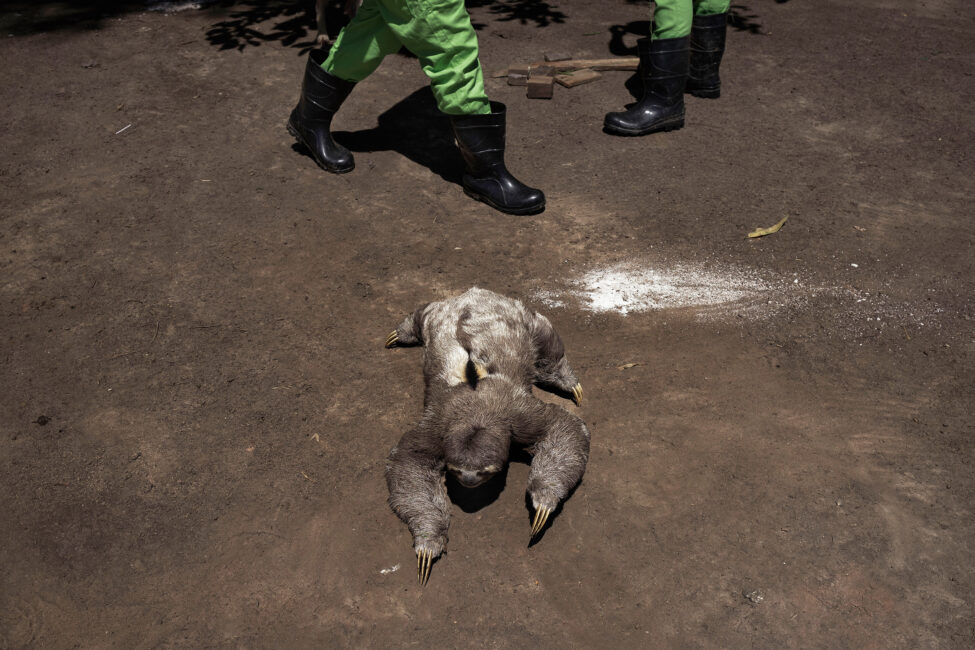
Because they live within one of the last remaining fragments of forest, the project leans toward showing the exuberance and strength of what remains rather than destruction alone, especially when we consider Guarani culture and way of life. It is a project about the force of nature and of a people who understand themselves as part of nature, even when surrounded by an immense scar on the earth, the urban sprawl.
Rafael Vilela
What visual strategies help you photograph something as abstract as real estate speculation and zoning pressure on Indigenous territory? Where in the frame does that pressure actually appear?
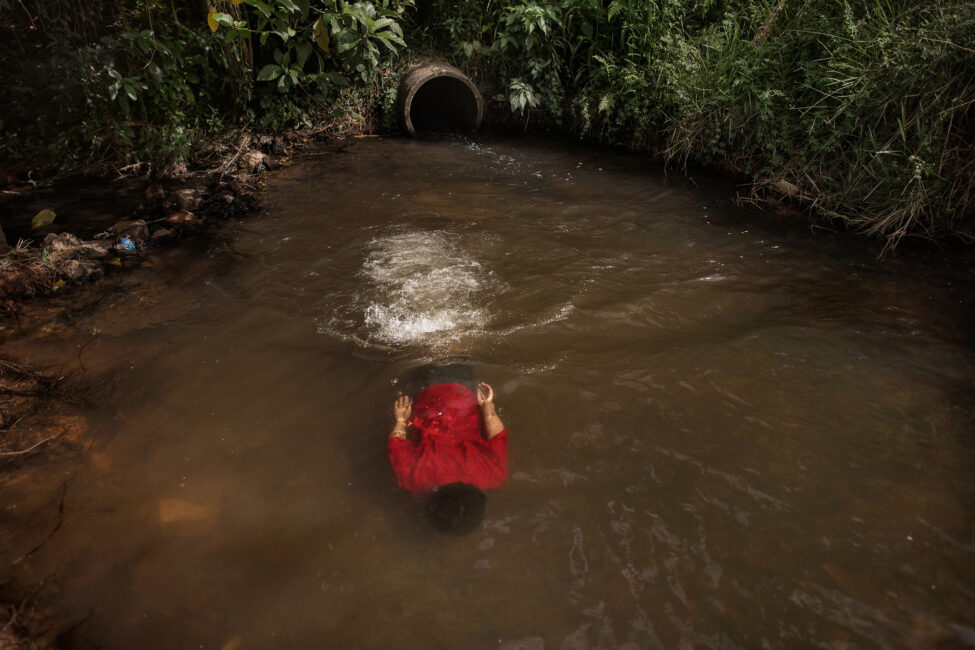
I believe real estate speculation is not as abstract as it may seem. It has very real and visible impacts, especially in a green territory surrounded by buildings and new developments. It is the pipe that channels a once free river, the concrete cutting through green, a branded garment beside an ancestral pipe, a thatched house encircled by highways. In my work, even photographs centered on beauty or simple moments of daily life often contain a disturbance, a visual noise in the vegetation or in Guarani cultural space, signaling the presence of that pressure, that contradiction of another world lying in wait, attempting to enter and destroy everything.
Rafael Vilela
When does a photograph start to act, on policy, in media, or within the community? What pathways (press partners, exhibitions with community presence etc) have you found effective?
A photograph begins to act the moment you are in the field — interacting, documenting, being present as both reporter and artist. Even if certain changes take time, presence in the community is already an action in itself. We cannot be there without truly being there: it requires attentiveness to needs and realities beyond our craft as documentarians.
I have always been part of the press, of the editorial world, and I have always believed in its possibilities. This project indeed gained significant visibility in independent Brazilian media such as Mídia NINJA and later globally through National Geographic. But dedicating so much time to it opened many other windows, especially in the exhibition world. The images were shown at the Auckland Festival of Photography in New Zealand, Leica galleries across Europe following the Leica Oskar Barnack shortlist, FotoFest Houston in the United States, the NatGeo Storytellers Summit, the CatchLight Visual Storytelling Summit, among others.
In 2024, when we received support from the British Council for the Arts, we developed an exhibition design from scratch with an extraordinary team of professionals. That was when I truly began to understand the power of experience and sensoriality as a way of exposing audiences to the accumulation that years of documentary practice had allowed me to build. From that emerged Nhemboaty, an interactive and emotional exhibition about the Guarani cosmological universe, presented in London and São Paulo in 2024 as a pilot project.
On the project achievements, we recently witnessed a major victory: the definitive demarcation of Guarani territory, expanding from the smallest Indigenous land in Brazil (1.8 hectares) to perhaps one of the largest Indigenous territories demarcated within a megacity (525 hectares). It is a civilizational conquest. Above all, it is the result of centuries of Guarani resistance, supported by a vast network including environmental activists, journalists, cultural movements, civil society organizations, and members of the current Brazilian government.
I believe my work was part of that struggle and helped materialize Indigenous resistance within the city through images.
Rafael Vilela
How do you negotiate proximity, being close enough to honor daily life and ceremony, yet distant enough to avoid imposing narrative or extracting images?
I believe that being close is the most powerful and beautiful way to relate to a community. It requires time, but also openness to understand and engage with values different from my own. Robert Capa summarized this well when he said that if it’s not good enough, you’re not close enough. In the Guarani context, I do not worry about maintaining distance, that distance is already imposed! I am a white man from the city working within an Indigenous community that preserves ancestral values. My work is far more focused on approaching than on maintaining distance. It is about recognizing reality as it is, listening – listening deeply – before speaking at all. It is about believing in what the other person believes. And, in some way, translating that into the world from which I come. As a dear friend, the Tupinambá leader Maria Agraciada, says, “I walk with a needle in my hands, piercing bubbles and stitching worlds together.” That is the strength of journalism and documentary practice.
Rafael Vilela
After years with Forest Ruins, what questions still resist closure for you, visually or politically? Where is the work pulling you next?
After all these years observing and living alongside a community that has bravely endured five centuries of contact and colonization, I often question the knowledge they have accumulated, what they have to teach us about the world. I also reflect on what they can teach and learn from other Indigenous peoples, some of whom have had contact as recently as five or fifteen years ago. These other peoples, who live predominantly in the Brazilian, Peruvian, and Colombian Amazon, are what researcher Daniel Canguçu calls “indigenous refugees”, they had sufficient contact with the Western world to choose isolation. It is there that I have increasingly dedicated my research efforts. I believe that the knowledge preserved in these isolated or recently contacted territories holds many of the keys we need to overcome this civilizational crisis, the true root of the widely recognized climate crisis.
Rafael Vilela
Info:
Rafael Vilela is a Brazilian photographer and journalist who documents the climate crisis in his country from a decolonial perspective. He is one of the founders of Midia NINJA, an independent journalism hub that challenged and reshaped the Brazilian media landscape during the rise of social networks in 2013. His photographs are part of São Paulo’s Museum of Modern Art (MAM-SP) permanent collection. In 2014 he was invited by Magnum Photos to be one of the Brazilian photographers in the OffSide Brazil project to report on the World Cup. Vilela was also nominated for World Press Photo Joop Swart Masterclass in 2013, 2014 and 2015. In 2020 he was selected by National Geographic’s Emergency Fund for Journalists covering Covid-19 and his work with Covid Latam won the POYLatam and the FotoEvidence Book Award with World Press Photo. In 2022 Vilela was shortlisted on Leica Oskar Barnack Award and awarded the Catchlight Fellowship and the National Geographic Explorer grant. In 2023, he was the lead photographer for the Washington Post’s “The Amazon, Undone” reporting series that won the Overseas Press Club Award, the George Polk Award and was a finalist for the Pulitzer Prize.