Roxana Savin – In constructing my images, I am drawn to the tension.
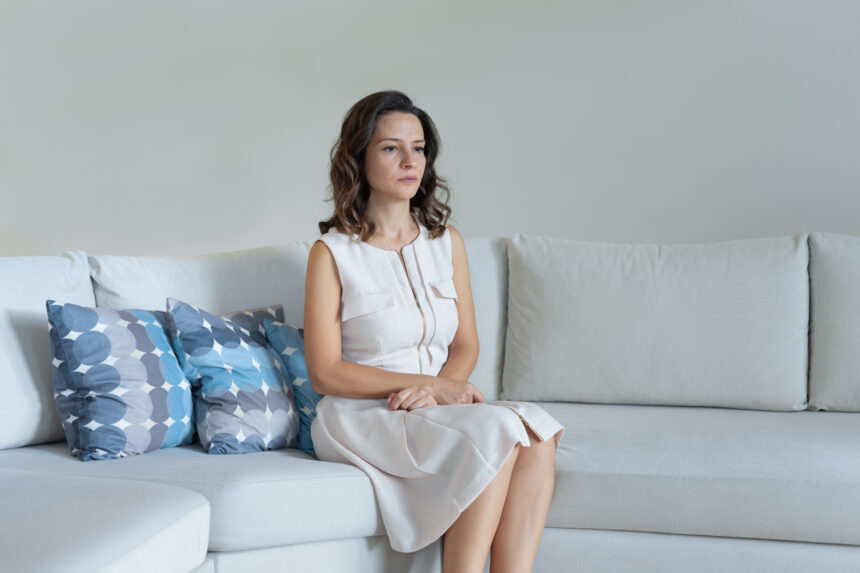
Roxana’s Savin “I’ll Be Late Tonight” is an autobiographical project that critically engages with themes of domesticity, gendered labour, identity, and power dynamics within patriarchal social structures. Rooted in her personal experience as a stay-at-home mother, the work reflects on the socio-cultural and psychological dimensions of unpaid domestic and care work, often rendered invisible and undervalued.
The project was developed during an eight-year period spent in a gated expatriate community in Russia, where she relocated after leaving a career in law. Within this community, men occupied the public sphere as economic providers, while women, many of whom had left professional lives in their home countries, assumed full-time caregiving responsibilities. Making this work became a process of self-reflection and resistance, and an attempt to articulate the complex, often unspoken experiences of women within domestic spheres.
On the occasion of this project, photologio reached out to the photographer for an interview with Athina Alkini
Roxana Savin
In “I’ll Be Late Tonight”, the safety of the space simultaneously becomes suffocating. When did you realize that this “comfort” functions as a form of confinement?
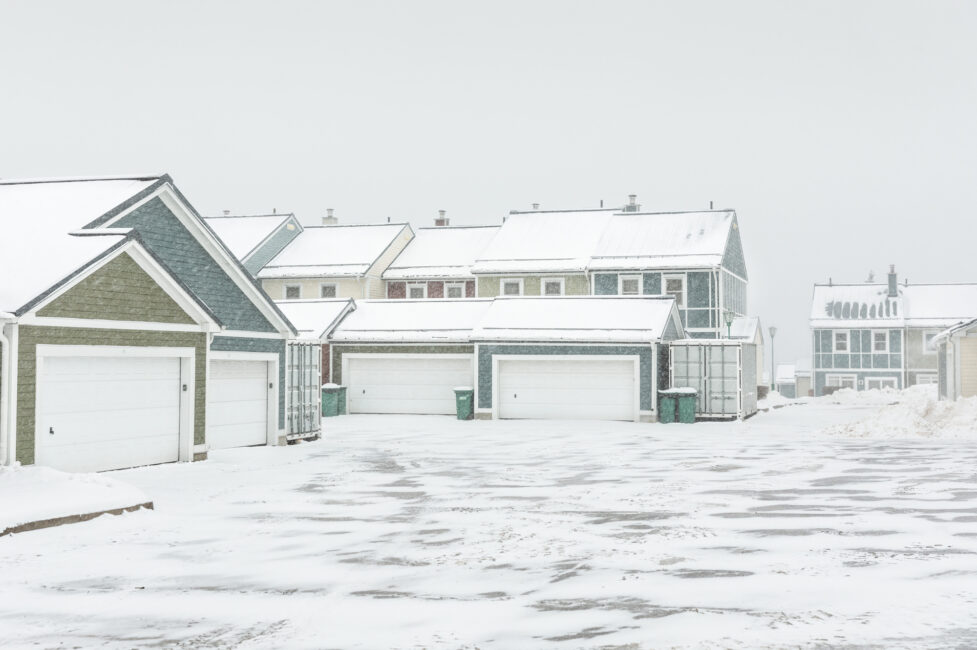
“I’ll Be Late Tonight” was made while I lived in an expatriate residence in Russia as a stay-at-home mother, after quitting my job to take care of my children. I spent eight years in that community, hosting expatriate families from different countries. The compound was gated and monitored 24/7, with security guards constantly patrolling the area. Directly next to my house, barbed wire demarcated the physical limits of the property.
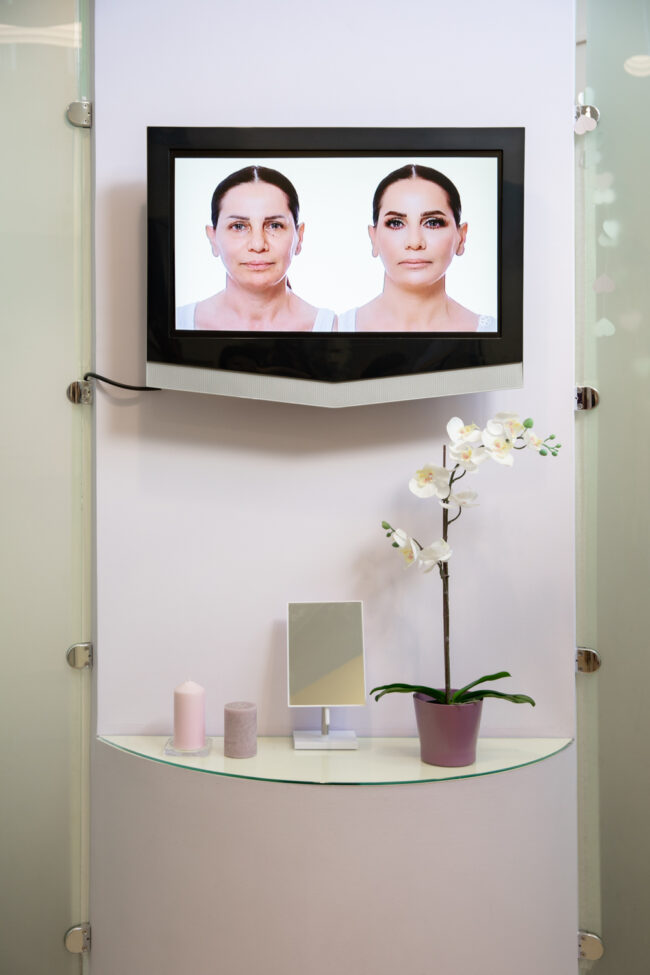
The residence was designed to be self-contained and comfortable: there was an international school, a gym, and even a beauty salon. Many stay-at-home mothers spent most of their time in the compound. For expatriates, there was the language barrier; in addition, the long commuting times to the city, along with the harsh and long winters, made going out less appealing.
During those eight years, I became aware of the feelings of isolation, along with a sense of being unseen or undervalued as a stay-at-home mother. At first, I didn’t recognise these emotions. I thought I was making a project about other stay-at-home mothers living in the same community. Eventually, I understood that the work was much more personal than I had realised. It wasn’t really about them; it was about me and my own experience within that enclosed environment.
Roxana Savin
Your work describes experiences that are often shaped by gender. Do you think this experience would have a different visual form if it were not gendered? How does that influence your aesthetic and narrative choices?
In the expatriate compound where I lived, it was almost always the woman who put her career on hold to support her partner and take care of the family. Stay-at-home dads were rare. They existed, but they were definitely the exception.
Statistics show that women around the world still carry most of the childcare and domestic responsibilities, even when they also have paid jobs. Domestic life has long been seen as part of a “female” sphere. I was surrounded by other stay-at-home mothers in similar situations, and my everyday world became a very feminine one.
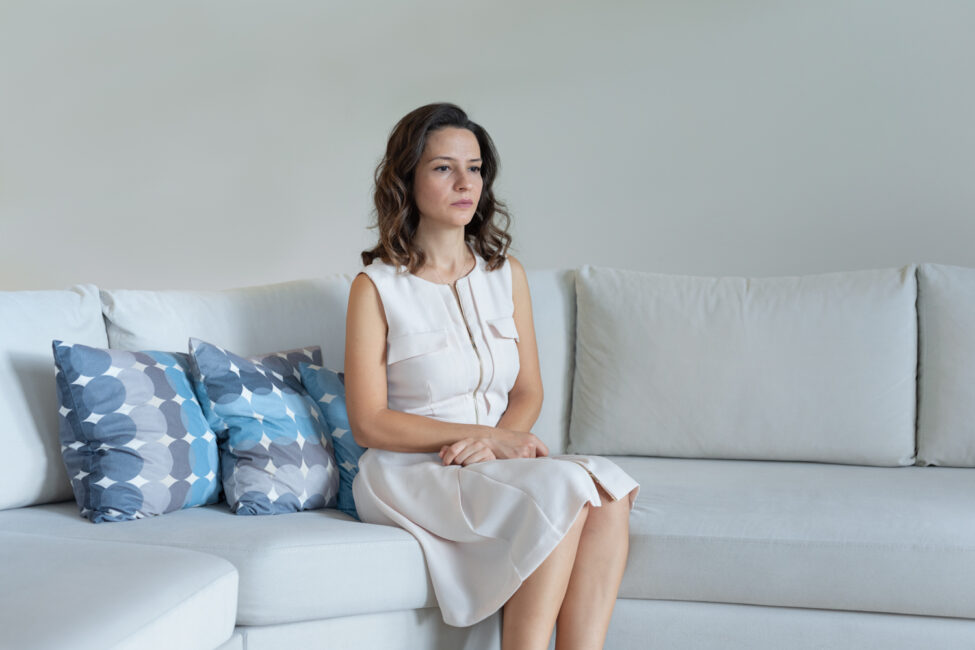
There was also a constant pressure to live up to certain roles: to be supportive wives, devoted mothers, and to look a certain way, to fit ideals of beauty and femininity that society continues to promote. I wanted my work to touch on all of these layers. By using an aesthetic often associated with femininity, I tried to reflect both the comfort and the constraint within that world.
Roxana Savin
The everyday life you document is charged with invisible, unacknowledged labour. How do you translate the invisible into an image, and what visual strategies do you use?
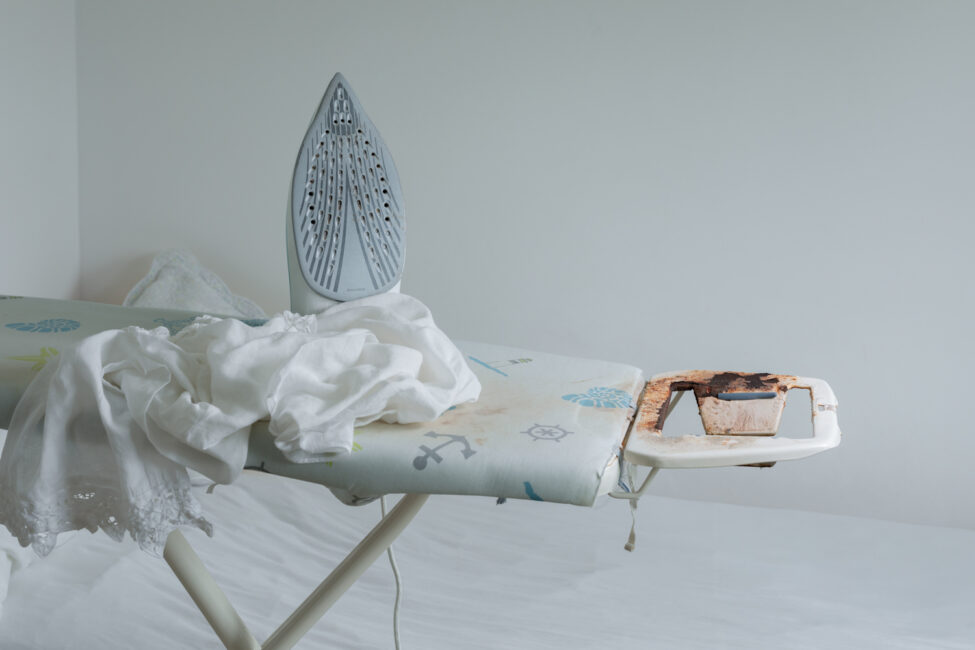
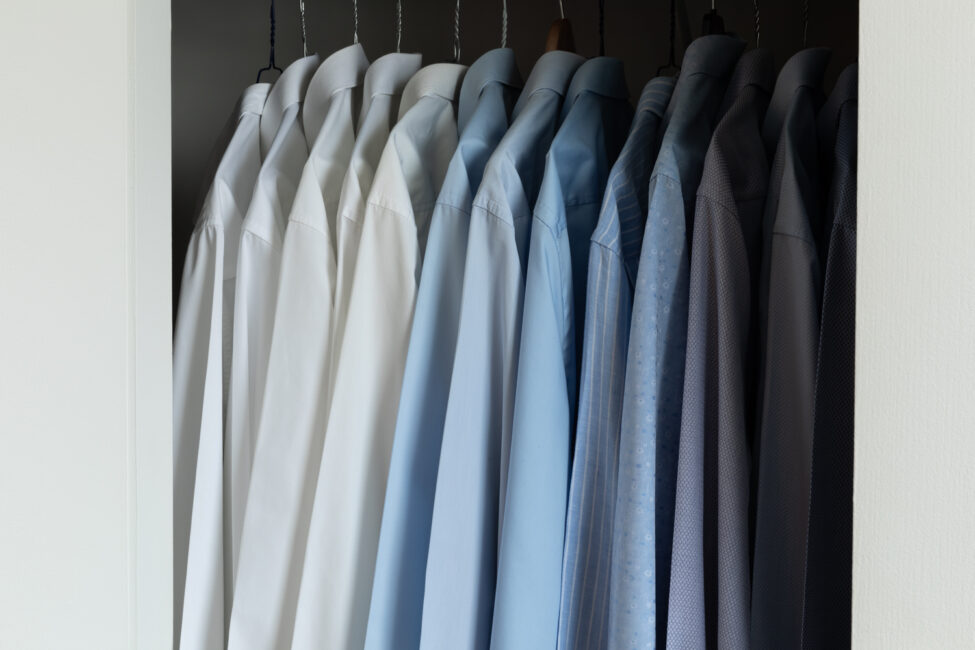
When you enter a home that is clean and orderly, where ironed shirts are neatly arranged in the wardrobe, dishes have been washed and put away, and the children are already asleep, it is easy to perceive this state of order as natural or given. The labour that sustains such order often remains invisible. It is only when disorder appears; when something is out of place or unsettled, that the presence of that otherwise unseen work becomes perceptible.
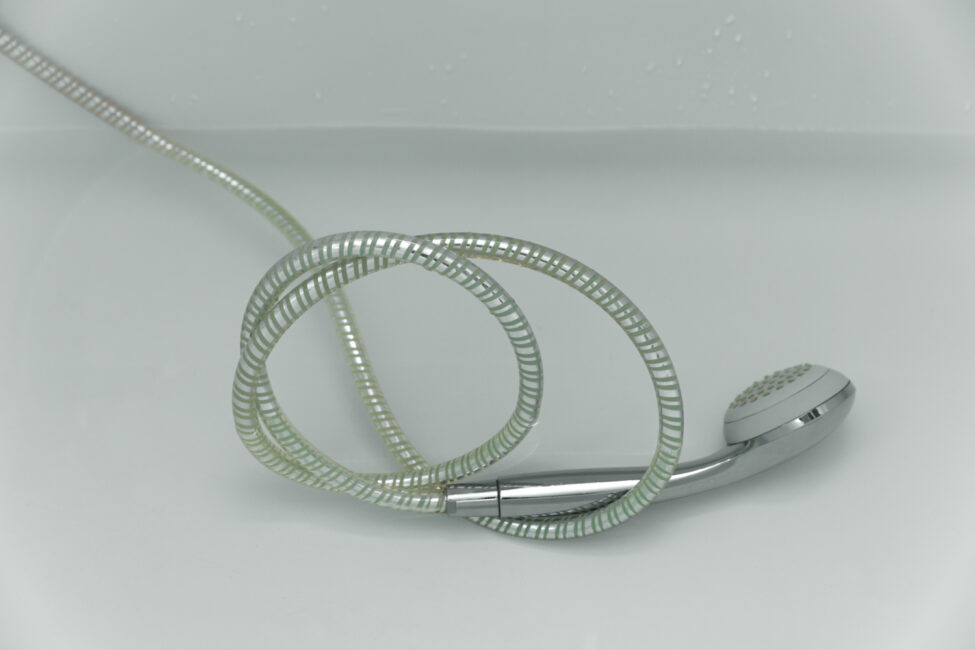
In constructing my images, I am drawn to this tension. I introduce or seek out a disruption within an otherwise composed and harmonious space. This ambivalence becomes a way to reflect on the hidden structures, efforts, and emotional cost of this labour.
Roxana Savin
The interiors you photograph are not merely settings; they function as psychological states. How do you decide when a space “says enough” without human presence?
There is a combination of elements- what’s in the composition, the framing, the light, the colours-that when put together, convey the psychological state I’d like to transmit. I often construct sets based on my real-life observations. It takes a lot of work and it’s a process of trial and error.
Roxana Savin
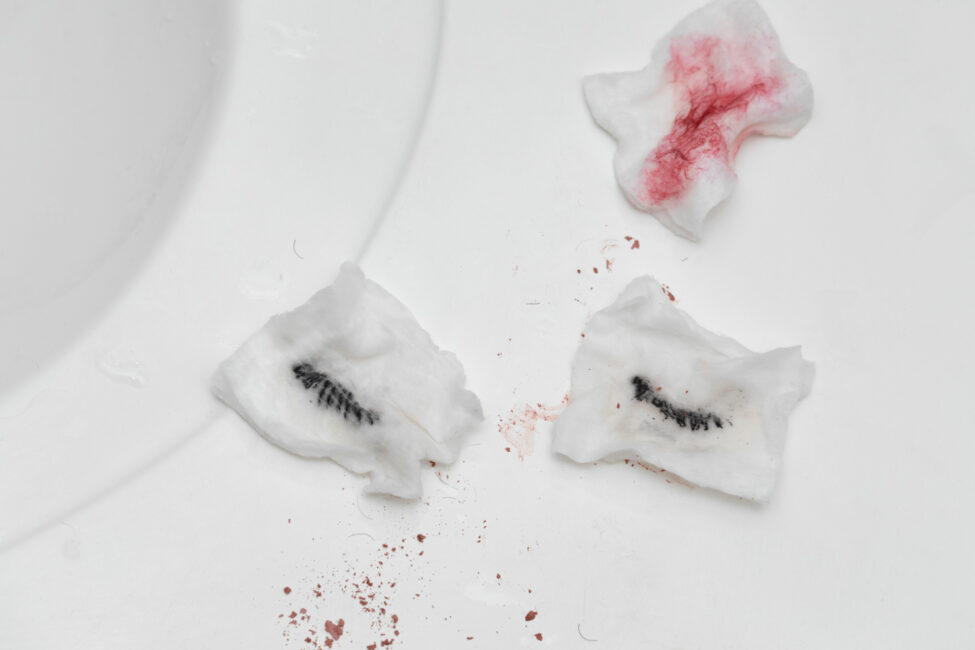
Can a space be a portrait?
A portrait can convey an atmosphere or an emotion. The same can be said about a space. An interior is rarely neutral; it carries traces of those who inhabit it. Light, colour, arrangement, and especially emptiness can generate a particular emotional climate. A room can feel tense, tender, oppressive, or calm. In this sense, space functions like a portrait of its occupants.
Roxana Savin
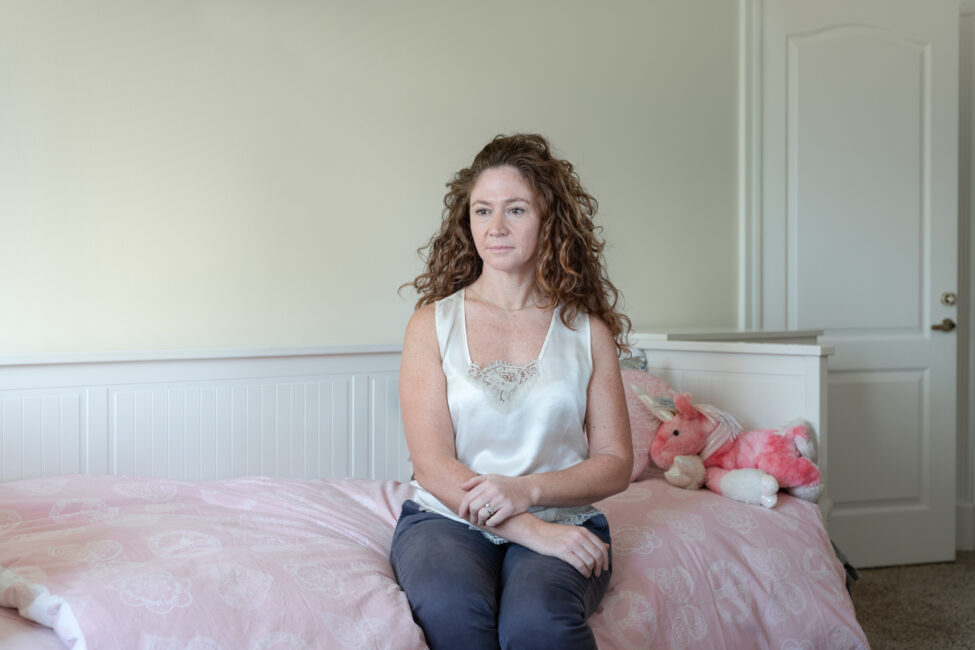
There is a tension between intimacy and restriction. How do you navigate the delicate balance between individual experience and a broader collective condition?
Making “I’ll Be Late Tonight” constituted a meaningful way to connect with other women participating in the project and an occasion to share our experiences of motherhood. From these interactions, I found that there are many aspects of motherhood that are repressed, and many women are reluctant to voice emotions such as feeling confined or overwhelmed because they are afraid of being judged or labelled ‘‘bad mothers’’. That made me think about how important it is to talk openly in society about the struggles and challenges that women face, instead of idealising motherhood.
There is so much pressure for mothers to show only the positive side of things and to project the image of a perfect mother, a perfect wife, or a perfect family life.
Roxana Savin
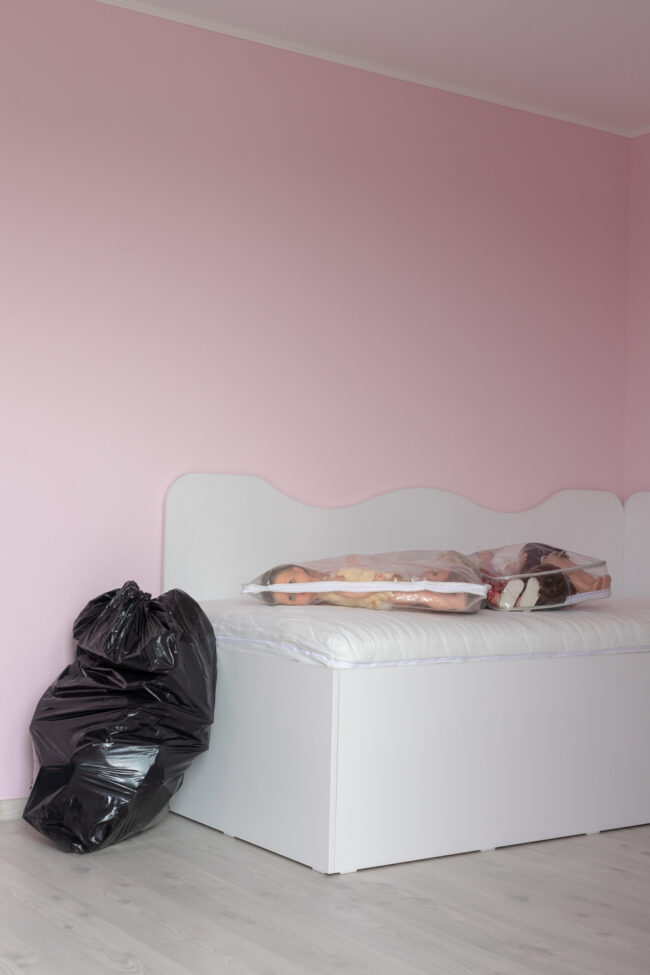
In your work, time does not appear linear but repetitive, becoming almost static. How do you work with the sense of duration and repetition within a single image?
The housework is repetitive, and the cycles of washing, cleaning, preparing meals, may seem endless. When you are at home by yourself while everyone else in the family is away, you perceive differently the passage of time.
In the photobook “I’ll Be Late Tonight”, I’ve been working with the repetition of sequences depicting domestic chores, alternating with landscape images, all taken during the long winter months. At the same time, when it came to single images, I chose to depict the women in a more contemplative way, that would communicate this feeling of time standing still.
Roxana Savin
Your photography seems to operate through abstraction and suggestion. How important is it for you to leave room for the viewer’s interpretation?
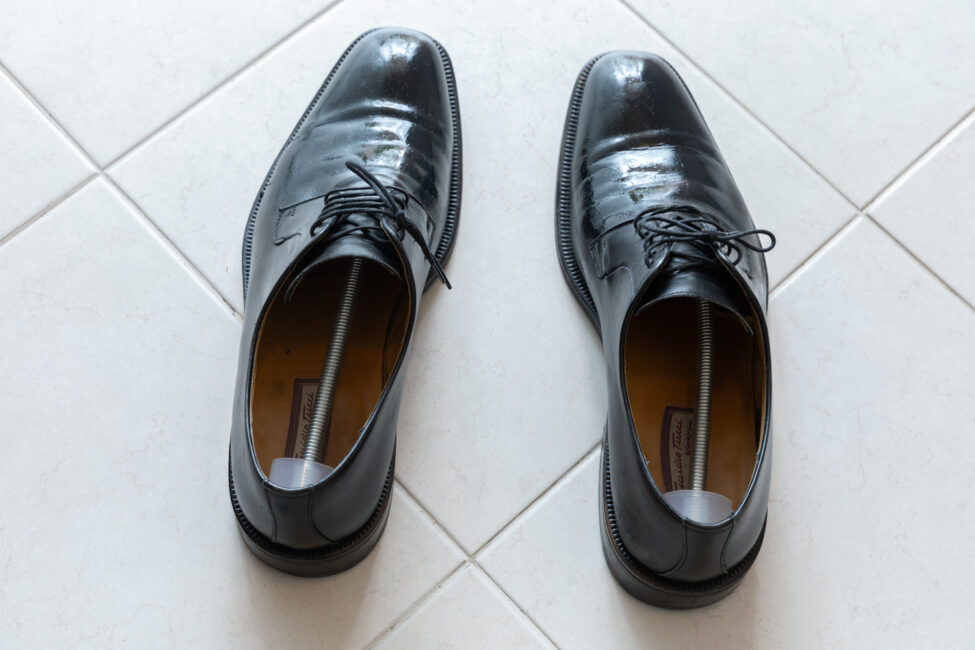
I always wished to make a project which makes people curious about what an image represents and want to know more. Rather than offering a fixed interpretation or a single, authoritative point of view, I prefer to leave space for ambiguity. I’d like to allow viewers to bring their own experiences, assumptions, and questions to the work, and to engage with its themes through personal reflection.
Experience is never uniform. There is a wide spectrum of realities, and they are all valid in their own ways. The images present interiors that appear orderly, harmonious, even “perfect.” At first glance, they might suggest comfort, stability, or success. Yet beneath this composed surface, the work raises questions about the expectations and constraints embedded in traditional gender roles. The critique is not direct or confrontational; it operates obliquely, through atmosphere, repetition, and subtle disruptions.
I am interested in how different viewers respond to this tension. On one occasion, a woman approached me to say that she found the images to depict a beautiful and appealing life.
Roxana Savin
How has your relationship with space as a subject evolved from your early works to today?
My most recent body of work explores beliefs around afterlife, referencing mythology, ancient customs and traditions in rural Romania. The rural environment, in particular, carries a temporal density. There are layers of history and belief that coexist in a space where reality and fiction begin to blur.
Similarly, the project uses staged elements that merge with documentary traces, although through a different visual language than “I’ll Be Late Tonight”. The images adopt a dreamlike, almost hallucinatory atmosphere, evoking a sense of suspension between worlds and states of being.
Roxana Savin
Info:
Roxana Savin is a visual artist and award-winning photobook author, working with photography and moving image. Savin graduated with an MA in Photography with distinction from Falmouth University, UK. Originally from Romania, her diverse body of work is influenced by personal experiences and her rich cultural heritage, exploring themes such as identity, belonging, gender roles and the status of women in contemporary society.
Her works have been widely exhibited in Switzerland, France, Romania, Slovakia, Russia, the Netherlands, Estonia, and published by the Financial Times Magazine, British Journal of Photography, Der Grief, Royal Photographic Society Magazine, Photomonitor, ARTdoc Magazine, among others. Her photobook “I’ll Be Late Tonight” was awarded Silver Winner by PX3 Paris and received an Honorable Mention by Encontros Da Imagem Book Award.
Savin’s short film “Rhythms of Restraint” was awarded Best Experimental Short by SFAAF Awards (Chile) 2024, received an Honorable Mention by WAEFF (New York) 2025 and was selected for the Berlin Women Cinema Festival 2025. Roxana Savin is based in Geneva and works between Switzerland and Romania.